| |
|
No 10/2025 | December Issue
|
|
|
Dear
Readers,
In our final newsletter of the year, we spotlight the PETRA research project. This initiative aims to improve women’s healthcare through a new AI-powered app designed to provide personalized support during menopause. The BIH is contributing its deep expertise in digital health, medical standardization, and secure data processing to the effort. We also feature the latest brochure from the Gene Technology Report working group, which outlines the vast potential within the German biotech sector while pinpointing the structural barriers that continue to stifle innovation. There is also fresh momentum on the funding front: five projects overseen by Charité BIH Innovation have been selected for the GO-Bio initial program, and new clinician scientists have joined our community. Plus, you can read about recent awards, key scientific publications, and events that showcased our work.
Thank you for your continued interest in our newsletter. Our next issue will appear on February 16, 2026. We wish you and your families a joyous holiday season and a healthy and happy start to the New Year.
Your BIH Newsletter Team
|
|
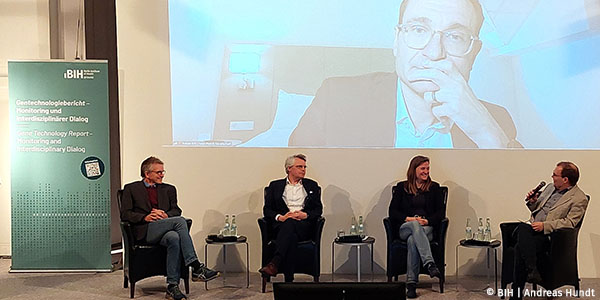
Genetic Engineering in Germany: Pressured but Promising
|
|
|
Societally, the topic is rather taboo, and knowledge about treatment options is limited: Women going through menopause often suffer from symptoms such as hot flashes, irregular bleeding, sleep disturbances, and concentration problems. These typical complaints frequently affect the well-being, daily life, and professional performance of those affected. The Fraunhofer Institute for Experimental Software Engineering IESE, together with strong partners, has launched the PETRA research project to individually support women during menopause with an AI-assisted app and to effectively improve their therapy. The BIH contributes essential expertise in digital health care, medical standardization, and secure data management. Read more
|
|
|
The Einstein Foundation Berlin honors the Australian psychologist Simine Vazire, the Brazilian Reproducibility Initiative, and the project Erring Rigorously with the Einstein Foundation Award for Promoting Quality in Research 2025. The latter project receives the Early Career Award for exploring how experimental errors shape genomic data, developing tools to make analyses more accurate and reproducible. The award is bestowed jointly with the BIH QUEST Center. Read moreRead the press release of the Einstein Foundation
|
|
|
Neues von Charité BIH Innovation (CBI)
|
|
|
A total of five projects supervised by Charité BIH Innovation (CBI) – the joint technology transfer of Charité and BIH – have successfully qualified for the GO-Bio initial program of the Federal Ministry of Education and Research (BMFTR). While NEUROLITH will begin the two-year feasibility phase (Machbarkeitsphase) in December 2025, our newcomers ZELF, G-CESE, ReTree-Therapeutics, and Bolly started the one-year conceptual phase (Sondierungsphase) of the program in October 2025. Congratulations!
Read more
|
|
|
News From the National Strategy for Gene- and Cell-based Therapies
|
|
|
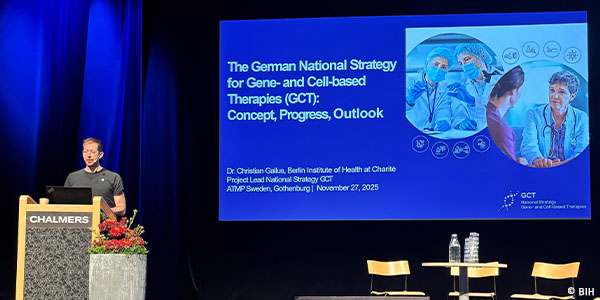
International Exchange on ATMPs in Gothenburg
|
|
|
News From the BIH Biomedical Innovation Academy (BIA)
|
|
|
CSP Alumnus Becomes Founding Director of IKIM
|
|
|
On the evening of November 18, this year's BIH Charité (Junior) (Digital) (Advanced) CSP certificate award ceremony took place at Villa Elisabeth. Since the last certificate award ceremony, over 60 program participants have completed their BIH Charité (Junior) (Digital) (Advanced) Clinician Scientist training. This means that the alumni community continues to grow – to a total of 370 members! We were delighted to celebrate our new alumni and wish them all the best for their future careers! Read more and view the photo gallery
|
|
|
New Clinician Scientists Recruited
For Call 2025_II a two-stage selection process, a total of 17 new Fellows were selected for the BIH Charité (Junior) (Digital) Clinician Scientist Program (including 10 women). One funding from the CSP is again provided by the German Center for Child and Adolescent Health (DZKJ), and one funding from the JDCSP is provided by Alliance4Rare. The new Fellows are scheduled to begin their funding on March 1, 2026. A warm welcome to all of them!
|
|
News From Research Group Stem Cell Dynamics & Mitochondrial Genomics
|
|
|
Scientists from the BIH research group Stem Cell Dynamics and Mitochondrial Genomics report on important mechanisms in immune and cell biology in two recent studies:
In the Journal for ImmunoTherapy of Cancer they have have published an article identifying a distinct subset of CD4⁺ cytotoxic T lymphocytes associated with severe neurological immune-related adverse events following immune checkpoint inhibition in cancer patients. These findings may help advance diagnostic approaches and disease monitoring in affected individuals.
Read the publication
In PNAS they have published a sudy together with international colleagues surprisingly showing that also synonymous mitochondrial DNA mutations can lead to cellular selection phenotypes. The findings suggest a new layer to consider in the studies of mitochondrial genetics.
Read the publication
|
|
|
W2 Professorship for PostDoc
Patrick Maschmeyer, PostDoc in the Ludwig Lab at the BIH, accepted a call for a W2 professorship at the University of Lübeck and the University Hospital Schleswig-Holstein. Congratulations!
|
|
In her BIH Lecture on December 5 Katy Börner introduced the Human Reference Atlas (HRA). A key concern of the information scientist is to visualize complex data in such a way that it is understandable, accessible, and usable for research, clinical practice, and the general public. At the BIH, she will continue to develop the HRA – a three-dimensional atlas of all anatomical structures and cells in the human body. In a pilot project with Peter Robinson, who moderated the lecture, she is investigating how this atlas can be linked to medical data in order to specifically improve diagnostics and research for rare and complex diseases. Read more about the lecturePresentation video
|
|
|
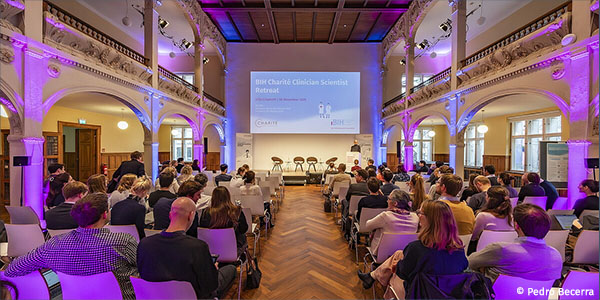
On November 18, around 150 participants enjoyed an inspiring day at the Clinician Scientist Retreat in the “Villa Elisabeth.” The aim of the one-day retreat was to strengthen the interdisciplinary networking of (Junior) (Digital) Clinician Scientists. In a bottom-up-approach the fellows helped shaping the program, which was reflected in the diverse range of topics. The topics were presented in a variety of formats: from introductory lectures to 3-minute pitches and poster sessions to interactive workshops and strategic inputs. Read the follow-up report and view the photo gallery
|
|
|
Cancer Research Berlin-Plattform
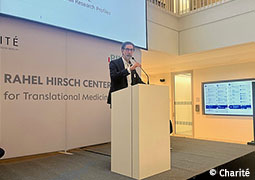
On November 13, around 60 cancer researchers from various institutions in Berlin, including the BIH, met at the Rahel Hirsch Center for Translational Medicine to discuss opportunities for collaboration. Read more (German only)
|
|
All BIH events are noted in our event calender. If you would like to receive a regular overview of upcoming BIH Events, please register here. Many thanks.
|
|
|
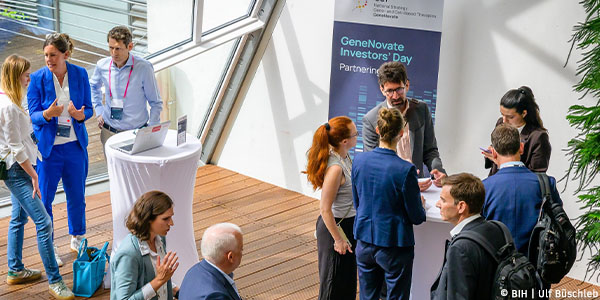
Following its successful launch this year, we are pleased to invite you to the 2nd GeneNovate Investors' Day in Berlin on June 9, 2026. The call for applications is currently open until January 16, 2026. International startups in the field of gene- and cell-based innovations are encouraged to apply. The focus in 2026 will be on AI-supported approaches in research, development, and production. This year, 16 companies from Germany, France, Switzerland, and the UK presented their innovations. Take advantage of this opportunity to present your innovation to investors, receive valuable feedback, and network with industry experts.
Read more about the call
|
|
|
BIH PhD Program – Third Call for PhD Candidates
After the preselection of 10 projects on November 24, the BIH Biomedical Innovation Academy (BIA) will issue a third call for PhD candidate applications for the BIH PhD Program on December 15, 2025. The BIH PhD program aims to promote interdisciplinarity and support young translational talents. The program will co-fund PhD positions for excellent translational projects that fit one of the four BIH research priorities. PhD candidates who have completed their master's degree in a relevant field can apply for up to three selected projects. Applications will be accepted until January 19, 2026 at 2 p.m., Central European Time. All administrative requirements and the list of the 10 preselected projects will be found here.
|
|
|
Vision Zero Inno Award 2026
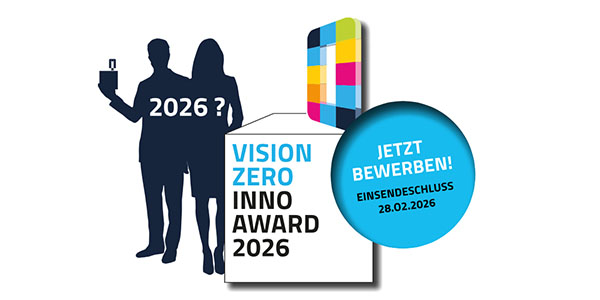
Vision Zero is committed to reducing the number of preventable cancer deaths to zero – with a clear focus on the needs of patients. We are looking for innovative, patient-focused, and scalable approaches to prevention, early detection, diagnosis, treatment, or empowerment. Applications from individuals and/or institutions residing and/or working in Germany are open until February 28, 2026. The award is endowed with 10,000 euros. The award ceremony will take place at the Vision Zero Summit on June 15-16, 2026, in Berlin. Read more about the call (in German)
|
|
|
|
|
|