| |
Dear Reader,
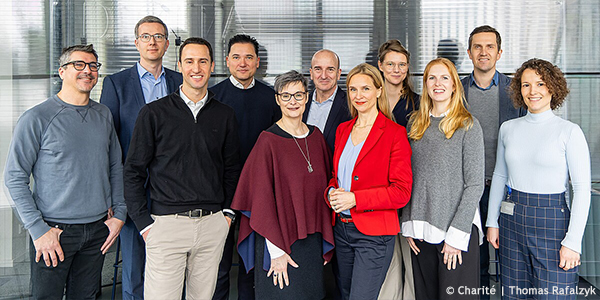
Fresh, clear, modern: The first (double) issue of our newsletter is being published in the new BIH design. The new corporate design reflects the growing role and sharpened profile of our institute. It strengthens our brand identity, makes our shared mission more visible, and unites the different areas of BIH under a clearly recognizable umbrella brand. The new layout thus represents not only a visual renewal, but also what distinguishes the BIH: innovative strength, interdisciplinary collaboration, and the commitment to quickly and effectively translate scientific findings into practice. Of course, what you appreciate about this newsletter remains unchanged: in-depth insights into current research projects, exciting developments in translational medicine, and news and perspectives from the BIH network. You will find plenty of all of this in this issue. Enjoy reading!
Your BIH Newsletter Team
|
|

|
|
|
|
|
© Michal Jarmoluk auf Pixabay
|
|
Whether process development, new technologies, or studies and therapies for genetic diseases, autoimmune disorders, and cancer: 22 projects from 13 cities are being supported with €9.5 million through the SPARK-BIH project funding program at the BIH, as part of the National Strategy for Gene- and Cell-Based Therapies (GCT). The aim is to translate groundbreaking GCT research into concrete, viable, scalable, and patient-centered therapies. Read the press release
|
|
|
With the establishment of an ARC Innovation Center, Charité – Universitätsmedizin Berlin and the BIH are creating a new organizational framework to advance medical innovations rapidly and in a targeted manner. ARC stands for Accelerate, Redesign, Collaborate. The center bundles medical expertise, scientific research, and technological development under a single roof, shortening the course from ideas through to everyday clinical practice. Read the press release
|
|
|
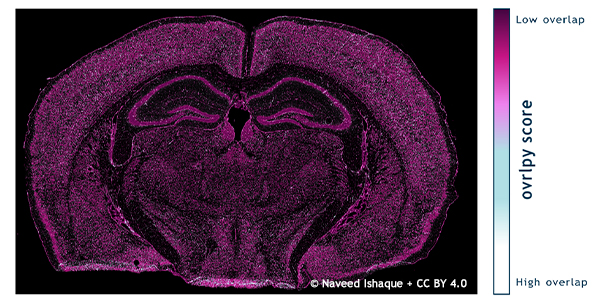
The new software tool ovrlpy improves quality control in spatial transcriptomics, a key technology in biomedical research. Developed by the BIH in international collaboration, ovrlpy is the first tool to identify cell overlaps and folds in tissue sections, thereby reducing previously unrecognised sources of misinterpretations. The researchers have published their results in the journal Nature Biotechnology. Read the press release
Read the publication
|
|
|
Researchers at the BIH, in collaboration with the technology firm Cellbricks, have developed a 3D printer capable of producing biological bandages. These custom-fit wound dressings are designed to seal large-scale injuries and could offer a transformative alternative to traditional skin grafts, not only for burn victims on Earth but also for astronauts aboard the International Space Station (ISS) or on future deep-space missions. The research team recently conducted two parabolic flight experiments that confirmed that the bioprinting process is effective under microgravity conditions, with the findings published in the journal Advanced Science. Read the press release
Read the publication
|
|
|
Lung cancer varies widely from patient to patient, and that diversity makes it hard to find effective treatments. Researchers at the BIH have developed a method to evaluate multiple therapeutic approaches on patient-derived “tumoroids” – miniature tumors grown from tissue removed during surgery at Charité. By testing drug responses across these tumoroids, the team showed that therapeutic success depends on a complex interplay of tumor characteristics rather than a single factor. Their results suggest that tumoroid-based testing could help physicians tailor treatments to individual patients and improve clinical decision-making. The BIH researchers have published their findings in Nature Biomedical Engineering. Read the press release
Read the publication
|
|
|
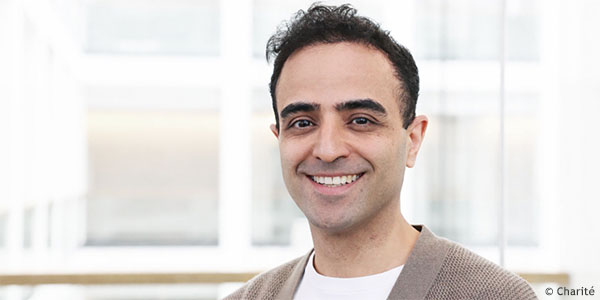
Researchers at Charité – Universitätsmedizin Berlin and the BIH Center for Regenerative Therapies (BCRT) have gained new insights into immune responses to therapeutic mRNAs. Here, senior author and study lead Dr. Norman Drzeniek answers questions about the research findings.Read more
|
|
Professor Petra Ritter, head of the Brain Simulation Group at the BIH, and her team are part of the newly launched industry collaboration within the IHI BRIDGE consortium. They contribute their expertise as leaders of the EU Testing and Experimentation Facility (TEF-Health) to the project.Read more
|
|
BIH is partner of this year’s bio:cap investival. In an interview Christopher Baum, Chair of the BIH Board of Directors and Chief Translational Research Officer of Charité, highlights why medical translation, strong innovation ecosystems, and connected value chains are essential to turn biomedical discoveries into validated therapies that truly benefit patients.Read the interview
|
|
With a total of €13 million in funding, eleven new projects are being launched – including the new Einstein Center for Early Disease Interception (EC‑EDI), in which the BIH is participating. Berlin-based researchers combine modern technologies such as single-cell multiomics, spatial biology, and AI to detect and treat diseases at an early stage.
Read more
|
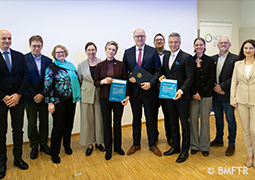
BALANCE-ET, a research project involving the BIH, examines the quality of life of breast cancer survivors and investigates how relapses and long-term side effects can be better prevented. On February 4 (World Cancer Day), State Secretary Matthias Hauer presented the funding approval during his visit to the National Center for Tumor Diseases (NCT) West in Essen and Cologne. Read the news of the BMFTR (only in German)
|
|
The BIH is strengthening its research faculty in February with the appointments of Dr. Leif Si-Hun Ludwig and Dr. Daniel Ortmann. Ludwig has been awarded a prestigious Heisenberg professorship in stem cell dynamics and mitochondrial genomics, a position funded by the German Research Foundation (DFG). Having led an Emmy Noether Research Group at the BIH and the Max Delbrück Center (MDC) since 2020, Ludwig will see his professorship transition into a permanent role following the initial five-year funding period. Ortmann, whose research focuses on the cutting edge of regenerative medicine, is taking up a professorship in cellular programming. His work involves using stem cells derived from a patient’s own body to repair damaged organs. Read the press release
|
|
|
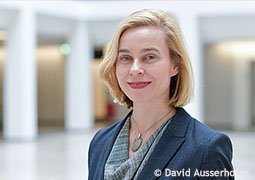
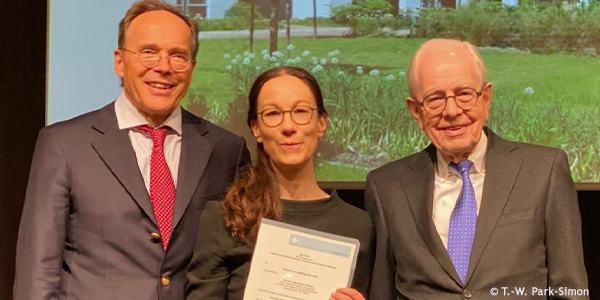
BIH professor Kirsten Kübler has been awarded the Claudia von Schilling Prize 2025, worth €10,000, for her publication on tamoxifen-associated uterine cancer. Since 2007 the Claudia von Schilling Prize has been recognizing outstanding achievements in breast cancer research. Kirsten Kübler's honored study shows that tamoxifen directly activates a key cellular signaling pathway a central driver in the development of sporadic uterine cancers, thereby challenging previously accepted models of therapy-related cancer development. The laudatory speech states, among other things: “The study thus not only delivers scientifically outstanding results, but also provides concrete impetus for improving treatment safety and combines fundamental findings with a clear perspective for patients.” Congratulations! Learn more about the study
Read more
|
|
|
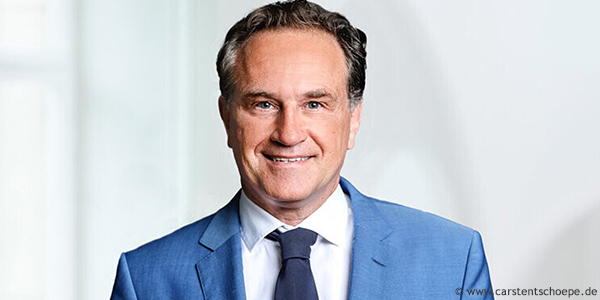
BIH Professor Dr. Carsten Tschöpe received special recognition at the “HFA Winter Meeting on Translational Heart Failure Research” in Berlin. He delivered the prestigious Brutsaert Lecture to an international audience – an honor linked to a lifetime achievement award in translational cardiovascular research, with a particular emphasis on immunocardiology. In his lecture, Tschöpe addressed heart failure with preserved ejection fraction (HFpEF) and the immunological and inflammatory mechanisms underlying the disease. Congratulations! Read more
|
|
|
The Neuroendocrine Tumor Research Foundation (NETRF) honoured 13 researchers for their work on the treatment of neuroendocrine cancers. Professor Kübler receives funding for a research project on tumors of the hormone-producing islet cells of the pancreas. Congratulations!Read more
|
|
News From the BIH QUEST Center
|
|
|
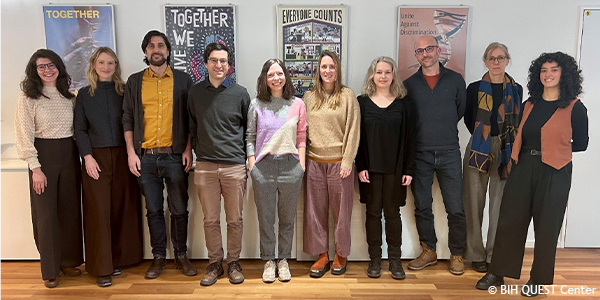
Following the retirement of founding director Ulrich Dirnagl in 2025, the BIH QUEST Center introduced a new organizational structure to make internal processes and decision-making more transparent and participatory. At the core of this structure is an elected Steering Board responsible for strategic decisions and coordinating long-term planning, alongside the newly established QUEST Council, which oversees the activities of the Steering Board and ensures the diverse perspectives of all staff are integrated into the Center’s strategic development. New communication formats support regular exchange and collaboration. Together, these changes strengthen the inclusion of all voices at QUEST and reinforce our shared mission of advancing robust, transparent research practices. Read more
|
|
|
News From Charité BIH Innovation
|
|
|
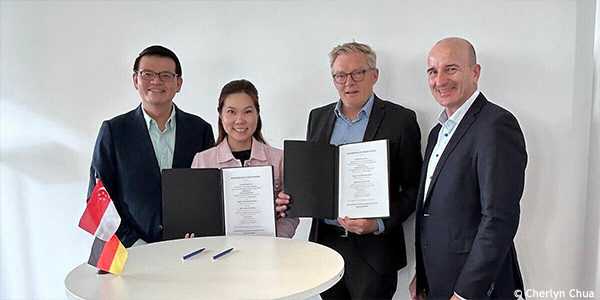
Charité/BIH and Enterprise Singapore (ESG) are continuing their successful partnership. Following the extension of the MoU for a further two years in November 2025, the current co-innovation call is already delivering its first results: With the support of Charité BIH Innovation – the joint technology transfer organization of Charité and BIH – three out of five start-ups from Singapore were matched with Charité PIs. This has now resulted in a joint full application with KYAN Medical (Singapore) for AI-supported therapy decisions in cancer diagnostics. Read more
|
|
|
News From the BIH Biomedical Innovation Academy (BIA)
|
|
|
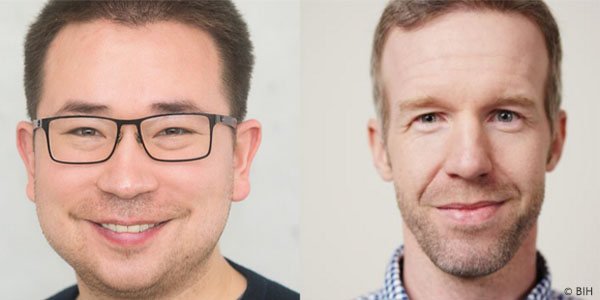
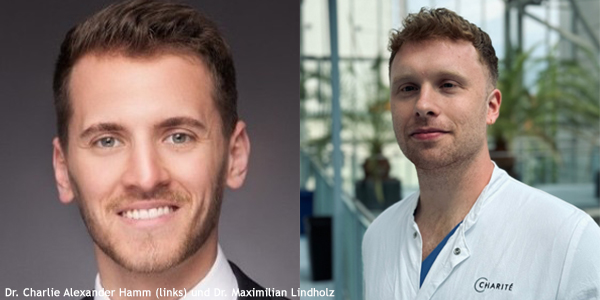
Prostate cancer is the most common cancer among men in 112 countries worldwide. However, if prostate cancer is detected early enough, the chances of recovery are very high. This requires that the disease be detected early enough using meaningful biomarkers. Dr. Maximilian Lindholz and Dr. Charlie Hamm, assistant physicians at the Department of Radiology at Charité – Universitätsmedizin Berlin and both fellows of the BIH Charité (Junior) Digital Clinician Scientists Program, investigated what these could be. They have now published their findings on potential biomarkers in JAMA Network Open. We spoke with both researchers about their study. Read the interview
|
|
|
BIH-MD Research Student Stipend Recipients Selected
In a two-stage selection process, the new BIH-MD student research stipend recipients were selected on January 22, 2026. The BIH-MD student research stipend for doctoral students in human and dental medicine are aimed at enrolled human and dental medicine students who are enthusiastic about research. Seven female and three male candidates were successful in the selection process. Funding will begin on April 1, 2026. Read more about the MD student research stipend (only in German)
|
|
|
Artificial Intelligence at Universities
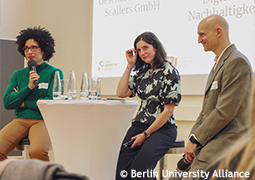
As part of its commitment to the Berlin Leadership Academy (BLA) of the BUA, the BIH Biomedical Innovation Academy (BIA) collaborated with TU Berlin to conceptualize and organize the event “Artificial Intelligence at Universities – Leadership Tasks Between Opportunity and Challenge.” On January 20, 2026, around 65 leaders from FU, HU, TU, and Charité gathered at the TU Berlin to discuss with Professor Fatma Deniz (designated president of the TU and currently Vice President of the TU Berlin for Digitalization and Sustainability), AI expert Kenza Ait Si Abbou, and Professor Rudolf Kerschreiter (spokesperson of the BLA).Read more / photo gallery (in German)
|
|
News From the National Strategy for Gene- and Cell-Based Therapies
|
|
|
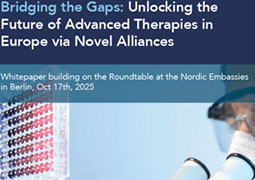
Oslo Cancer Cluster, in collaboration with the Berlin Center for Gene and Cell Therapies, has published a new whitepaper “Bridging the Gaps: Unlocking the Future of Advanced Therapies in Europe via Novel Alliances.”Read more
|
|
The liver plays a central role in the body’s metabolism and immune regulation. Yet, many cellular mechanisms involved in liver diseases remain only partially understood. Researchers from Charité, Si-M – The Simulated Human and the Cincinnati Children’s Hospital Medical Center have now gained crucial insights into the molecular processes underlying liver function. The study provides new approaches for understanding and targeted treatment of liver diseases. In this interview, Dr. Milad Rezvani, the study’s lead author and alumnus of the BIH Charité Clinician Scientist “Excellence Track” discusses the findings. Read the interview
|
|
|
A team led by former BIH professor Professor Sarah Hedtrich focused on a form of fish scale disease known as autosomal recessive congenital ichthyosis (ARCI). This is a rare, hereditary skin disorder that disrupts the formation of the body's skin cornea. Those affected often have dry, reddened and scaly skin that can be very itchy and tight. Until now, only the symptoms of ARCI could be treated. The team has now developed a treatment method that can correct the mutation in the gene that causes ARCI. The problem: Gene therapies that are applied to the skin, which are supposed to be transported to the right place via small fat globules (lipid nanoparticles), are difficult to absorb due to the skin's protective barrier. The researchers have now found a way to modify the skin barrier to make this possible. The project was funded by SPARK-BIH. We spoke to Prof. Hedtrich about this approach. Read the interview
|
|
|
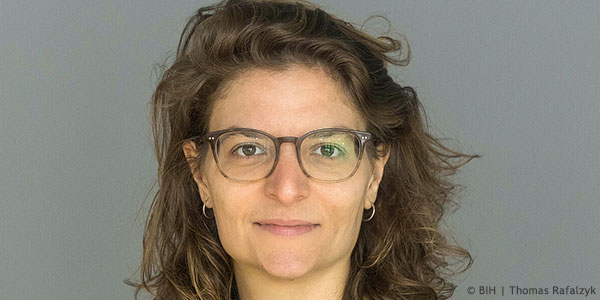
In the treatment of tumors such as malignant melanoma (black skin cancer), a therapy can be used in which the patients’ own immune cells are modified in the laboratory and then returned to them to fight the disease. However, selecting the immune cells suitable for this purpose has so far been a lengthy process. A team led by Dr. Lucie Loyal developed the CATCH assay, which makes this quicker, more systematic and possible on a larger scale. The researcher has now received the First and Second Application Funding from the Else Kröner-Fresenius Foundation to conduct a large-scale study to characterize tumor antigens. Based on this she will create a machine learning model that can predict therapy success. We spoke with Dr. Loyal about her project. Read the interview
|
|
|
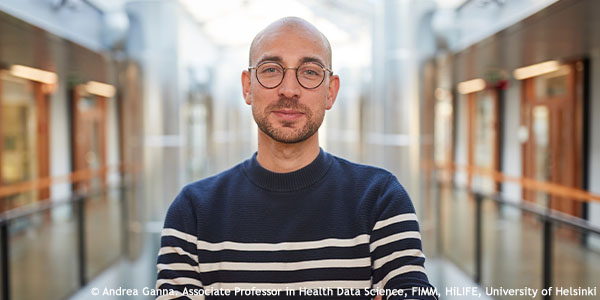
Electronic health record-based risk scores complement genetic risk scores and enable a multitude of scientific and clinical applications, as outlined by Andrea Ganna in his BIH Lecture on January 30, 2026. They can be used to enhance trial emulation, and improve clinical trial designs, as well as causal inference. Additionally, these combined models are vital to realize precision prevention in routine care. However, their varying performance across geographical regions, socioeconomic backgrounds and ancestry groups poses a challenge for fair, equitable use at population scale. These can be addressed through better data curation, improved AI models, and combining these models across European healthcare systems. The lecture was moderated by Professor Maik Pietzner (BIH Center of Digital Health, Health Data Modelling). Read more about the lecture
Presentation video
|
|
|
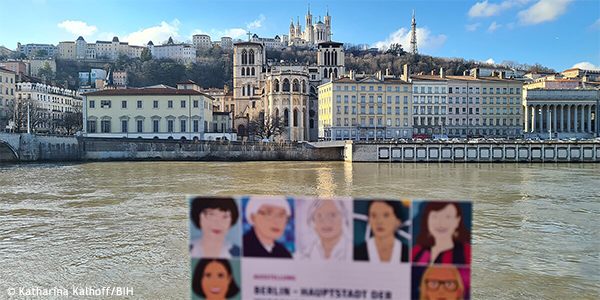
The BIH is delighted to announce the next international stop of its successful touring exhibition “Berlin – Capital of Women Scientists”, now on display at the Goethe-Institut Lyon. From January 17 to March 28, 2026, visitors can explore the stories of 22 pioneering women who shaped Berlin’s scientific history and discover their groundbreaking contributions. With more than 15,000 female scientists and the highest share of women professors, Berlin leads the way in gender equality in science in Germany – an achievement celebrated by this exhibition. Read more and see the photo gallery
|
|
|
All BIH events are noted in our event calender. If you would like to receive a regular overview of upcoming BIH Events, please register here. Many thanks.
|
|
|
The BIH Biomedical Innovation Academy (BIA) and the Medical Faculty of Charité - Universitätsmedizin Berlin are publishing the first call for applications of 2026 for the BIH Charité (Junior) Clinician Scientist Program. This program offers research-oriented physicians a structured residency with defined space for research. In addition, the BIH Charité (Junior) Digital Clinician Scientist Program will be announced for physicians with a research focus in the field of computer-assisted medicine. The call for application will be launched on mid-February and deadline for all calls will be March 12, 2026. Read more about the calls
|
|
|
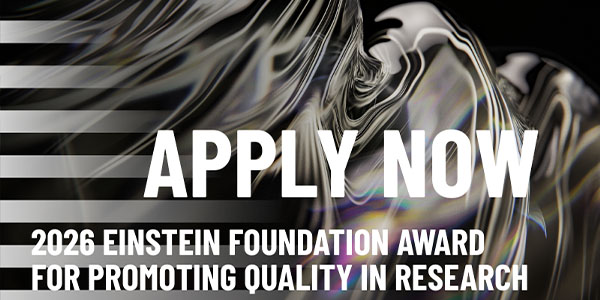
The annual €350,000 https://award.einsteinfoundation.de/about in cooperation with the BIH QUEST Center for Responsible Research is inviting applications and nominations again. The international award is open to any researcher, or group of researchers, institution, organization, and early career researcher around the globe whose work helps to fundamentally advance the quality, transparency, and reproducibility of science and research. Applications can be submitted until April 30, 2025 (10 p.m., UTC). Read more
|
|
|
|
|
|